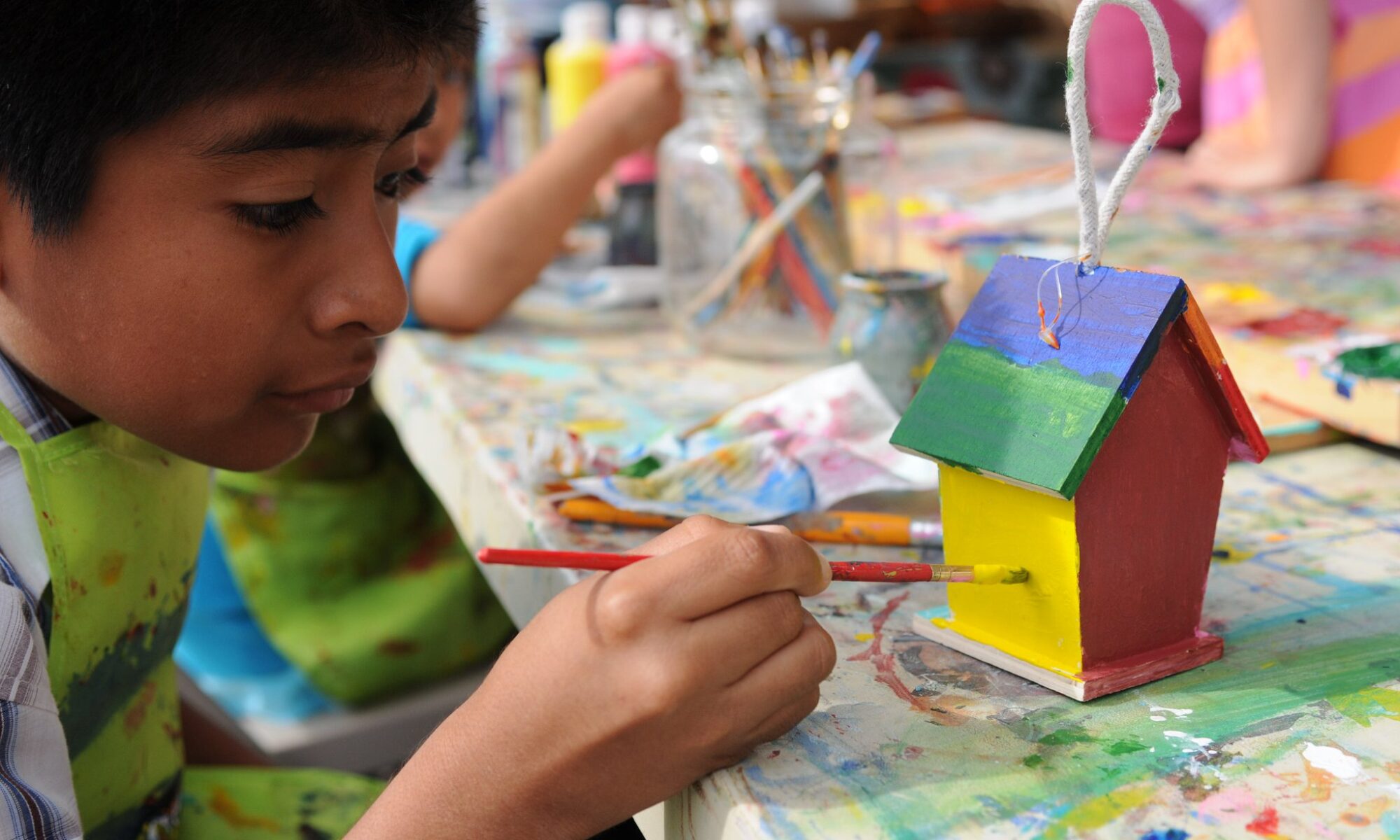

Do you want to give your children a rich, vibrant visual arts education at home, but feel completely unqualified because you don’t consider yourself a creative artist? If you can’t draw a straight line, the thought of teaching an elementary art lesson can feel overwhelming. You worry about the mess, buying specialized supplies you’ll never use again, or having to read dry history and theory books just to explain a simple brushstroke.
Here is the good news: You do not need to be an artist to guide your child. Here is the Best Art Curriculum for Homeschool: A Non-Artsy Mom’s Guide (2026 Focus).
As a former homeschool mom turned international art teacher trainer, I created the Science Art Method™ specifically to bridge this gap. This open-and-go framework removes the pressure from the parent and puts the discovery back in the hands of the child. Below is a raw, honest look at what a true, stress-free elementary art curriculum should look like—and how you can teach the whole family at once. Learn everything you need to know about this art curriculum below.
What should be included in an elementary art curriculum?
A high-quality elementary art program should never rely on “copycat” crafts or rigid, pre-determined project kits where every child’s work looks exactly the same. Instead, it should focus strictly on the foundational visual arts domains (like drawing, color theory, clay modeling, and brush mechanics) through a child-led, process based art approach.
A true curriculum builds real art skills sequentially. Each lesson should naturally prepare a child’s fine motor skills and spatial awareness for the next step, allowing creative confidence to unfold naturally.

Is this curriculum open-and-go, or does it require extensive parental prep time?
It is completely open-and-go. You absolutely do not have to understand or read deep pedagogical theory training books first! You simply read the quick page introduction, grab your art supplies, and start experimenting alongside your child.
This art curriculum is intuitive and exceptionally easy to follow. Because each art lesson has been curated to sequentially build the exact skill needed to progress, your total prep time is down to just a few minutes of reading and basic material setup.
I am completely non-artistic; does this provide step-by-step guidance, or does it assume I already know how to teach art?
It is explicitly designed for parents with zero art background. If you feel like an imposter trying to teach art, don’t worry—our highly visual guides show your child exactly how to do things like hold a brush or control their tool pressure.
All of these art lessons were designed by a professional art educator in the exact developmental order your child needs. You aren’t performing advanced artistic demonstrations; you are simply acting as an encouraging facilitator following a proven, stress-free roadmap.
Can I teach this to multiple elementary grades at the exact same time?
Yes, you can teach your entire family at once. Having started out as a homeschool mom myself, I know the daily reality of juggling multiple children at vastly different ages.
These art lessons are uniquely designed for multi-level age integration. The core concepts are scalable: whether you have a 2-year-old exploring sensory textures, a 6-year-old learning color mixing, or a teenager mastering spatial lines, they can all sit at the exact same table working on the same lesson framework at their own developmental speed.
Does it require expensive, highly specialized art supplies, or can I use basic household items?
No specialized or expensive materials required. This curriculum comes with a straightforward, clear art supply list right in the front of the book.
These are basic, easily sourced items you can find in almost any local craft store or big-box supermarket—and you likely have many of them sitting around your house right now. Ensuring that families of all budgets could afford these beginner art supplies materials was one of the most important elements I built into this method.
How does this curriculum align with my specific homeschooling philosophy (e.g., Montessori, Charlotte Mason, Classical)?
It serves as the perfect companion to any educational philosophy or pedagogy your family focuses on. Because the curriculum centers strictly on the foundational elements of the visual arts, there is zero historical or religious messaging to conflict with your chosen path.
Instead, it blends smoothly into cognitive growth frameworks like Montessori, Reggio, or Charlotte Mason by respecting your child’s absolute independence. It is not a rigid environment; it relies on letting your child fully experience the artistic process to build lifelong critical thinking and fine motor confidence.
FAQ Section
What is the best art curriculum for homeschool families?
The best homeschool art curriculum is one that focuses on process art over copycat crafts. An ideal program, like the Science Art Method™, uses sequential, open-and-go lessons that build real fine motor skills and creative independence without requiring the parent to have a background in professional art education.
Can you teach an elementary art curriculum to multiple grades simultaneously?
Yes, high-quality elementary art lesson plans are developmentally scalable, allowing you to teach multiple children of different ages at the exact same table. Because fine arts foundational skills (like brush mechanics and color mixing) are universal, students from toddlers to teenagers can engage with the same concept at their own developmental pace.
What basic supplies are required for a budget-friendly homeschool art curriculum?
A practical homeschool art curriculum should require only basic, easily sourced art supplies rather than expensive, specialized materials. Essential items include student-grade watercolor paints, heavy drawing paper, non-toxic clay, and standard brushes, all of which are easily found at local craft stores or big-box supermarkets.
About the Author: Spramani Elaun
Spramani Elaun is an international art educator, author, and the creator of the proprietary Science Art Method™. With over 20 years of experience pioneering sensory-inclusive, eco-friendly art pedagogy, she specializes in developmental art tracking for young children. As a former homeschool mother and the founder of EcoKidsArt.com, Spramani has trained thousands of educators and parents globally to teach foundational visual arts skills through a child-led, independent process. She is the author of multiple art education guidebooks, including Nurturing Children in the Visual Arts.
All rights reserved © 2026, Nature of Art®

Nature of Art® provides art pedagogy
This website and its blogs supports individual educators in teaching children visual arts. It does not authorize professional development, staff training, or adaptation of the Science Art Method™ for institutional use.
No part of this blog may be used or be reproduced in any manner whatsoever including reproducing, publishing, performing, and making any adaptions of the work – including translation into another foreign language without written permission except in the case of brief quotations embodied in critical articles and reviews.
Nature of Art® Publishing P.O. Box 443 Solana Beach, California 92075.
About The Author
