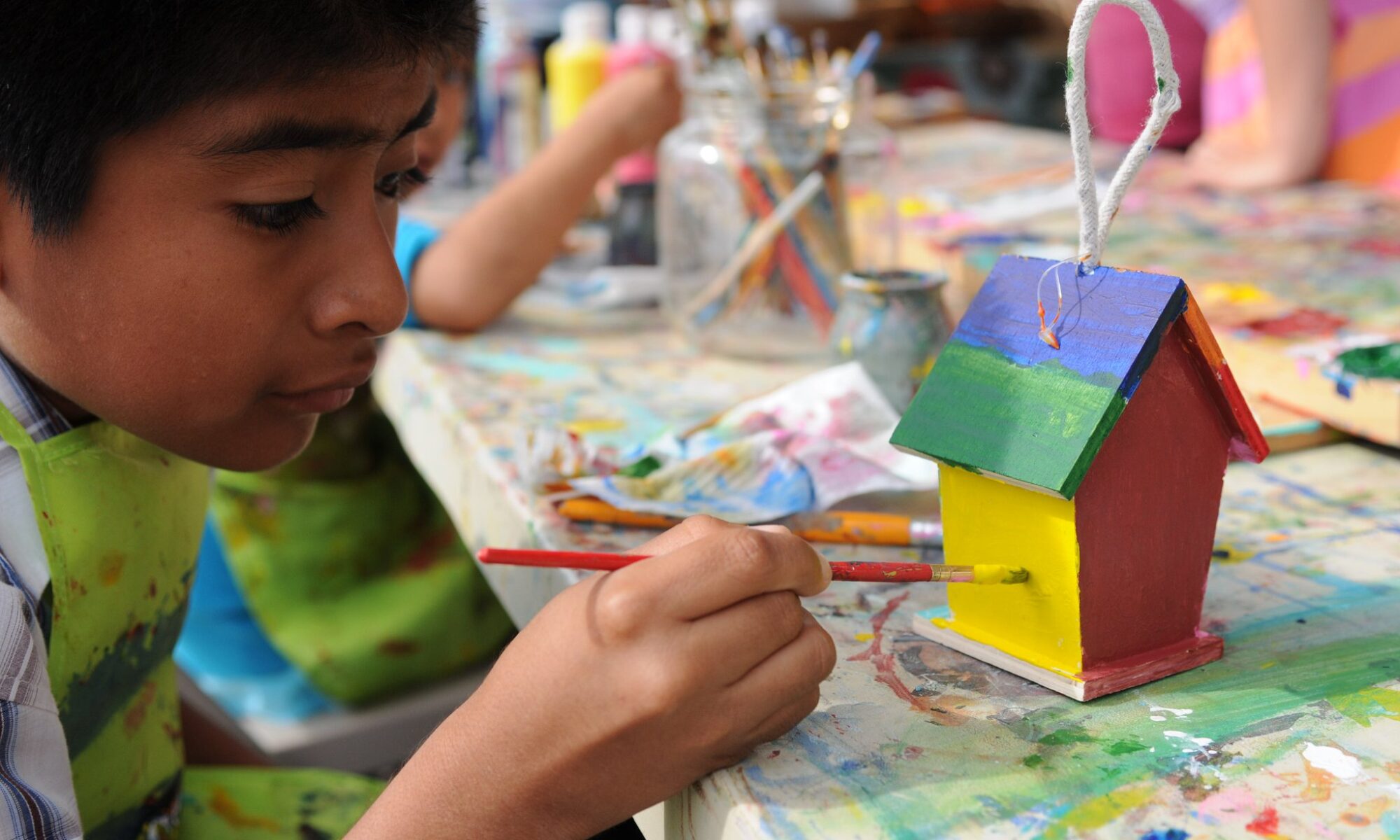

You might think the most important skills children need for future success are technology, science, mathematics, and engineering. While these subjects are certainly important, one of the most overlooked skills children need is the ability to think creatively.
Science, technology, engineering, and mathematics can lead to exciting careers and strong job security. However, in the pursuit of academic achievement, one essential skill is often overlooked by both parents and educators: creative thinking.
Thinking creatively means having the ability to invent, design, or create something new and original. It is the ability to bring forward ideas that solve problems or imagine possibilities that did not previously exist.
Creative thinking is not something children simply memorize or learn through direct instruction. Instead, it develops through experience. When children are given the time, freedom, and opportunity to explore ideas, solve problems, and experiment, they begin developing the habits of creative thinking.
For the past 30 years, I have had the privilege of teaching well over 200,000 children in my art classes. Throughout those years, I have watched creativity emerge in thousands of young artists. One of the greatest lessons I have learned is that creativity develops in children who enjoy tinkering, experimenting, and working through many versions of an idea before discovering a solution.
Creative thinking requires a different type of thinking than most traditional academic subjects. It is not the same type of thinking children use to pass tests or complete structured assignments.
When children study mathematics, science, history, or algebra, they are using important cognitive skills. They rely on memory, recall information, and solve problems that have expected outcomes. These subjects strengthen essential parts of the brain and should absolutely remain a priority.
At the same time, children also need opportunities to develop grit, solve open-ended problems, and use their imagination. Many academic subjects leave very little room for original thinking. Children who spend most of their time preparing for tests may have very few opportunities to think creatively.
Creative thinking builds upon knowledge learned in school, but it also encourages children to take risks, explore the unknown, and solve problems that do not always have one correct answer. If children spend most of their time memorizing information and preparing for tests, they may miss valuable opportunities to develop confidence in taking risks. Risk-taking is an important part of learning. When children learn to take thoughtful risks, they begin trusting themselves to think in new ways. That is what develops creative thinking.

Creativity Is More Than Making Something That Looks Good
One of the most common misunderstandings I see is how adults define creativity. Parents often admire the child whose drawing looks realistic or resembles something recognizable. They naturally describe that child as creative. However, many times that child is simply copying another artwork. To the average viewer, copied artwork may appear beautiful and artistic. Yet copying is very different from creating.
Many drawing, painting, and craft lessons ask children to follow the teacher step by step until everyone produces nearly identical artwork. While these activities may teach observation and technique, they do not necessarily teach children to think creatively.
The artistic process is much more than producing a finished picture. An artist imagines, experiments, makes mistakes, solves problems, revises ideas, and gradually constructs something new. This process develops creative thinking.
When a child sets out only to copy something exactly, they are not exercising this creative part of the mind. Instead, they are learning to follow procedures. This distinction is incredibly important for parents to understand. Children need opportunities to think creatively alongside their academic studies.
Why the Arts Matter
The visual arts give children one of the few opportunities to regularly practice creative thinking. One of the greatest misunderstandings about the arts is believing that creativity is measured by how beautiful a finished drawing or painting looks. In reality, creativity develops through the process of making art, not simply through the final product.
When children invent, experiment, revise, and solve problems through art, they strengthen the very skills that help them become innovative thinkers. The finished artwork is only the visible result. The real learning happens through the thinking that takes place while they create.
Copying can produce artwork that looks beautiful and artistic. Inventing and designing often take much longer and may not always produce something that appears aesthetically beautiful to the viewer. Yet the child who perseveres, experiments, solves problems, and gains confidence through the artistic process is developing the ability to invent, innovate, and think creatively.
Children need more opportunities to fail, experiment, solve problems, and try again. That process develops a creative mind. It takes time, and it often requires patience from parents. Giving children opportunities to evaluate, revise, repeat, and improve their ideas is essential for developing innovative thinking. These skills can later be applied to any profession, whether a child chooses computer science, medicine, engineering, business, or another career.

The Wright Brothers: What Innovation Really Looks Like
One of my favorite examples to share with parents is the story of the Wright brothers because it perfectly illustrates what creative thinking looks like. Wilbur and Orville Wright did not invent powered flight because they memorized information or always had the correct answers. They succeeded because they were willing to spend years experimenting, solving problems, redesigning their ideas, and trying again after failure.
Their success required grit, perseverance, and open-ended inquiry. They had to imagine something that had never existed before. They had to think visually, ask difficult questions, and continue refining their designs through countless setbacks. Most importantly, they had to move beyond the fear of the unknown. This is what creative thinking looks like.
Innovation is rarely a straight path. It is built through experimentation, persistence, and the willingness to improve an idea over and over again until it works. These are the same habits we should be encouraging in our children.

As artificial intelligence and technology continue to transform the workforce, success will depend on far more than science, engineering, mathematics, and technical knowledge. The challenges of the future will require people who can imagine new possibilities, solve problems creatively, and develop ideas that have never existed before. Technology alone does not invent. People do.
Children who learn how to think creatively today will become tomorrow’s inventors, designers, engineers, entrepreneurs, artists, scientists, and innovators. Knowledge gives children information, but creative thinking teaches them what to do with it.

The Biggest Roadblock May Be Us
So where do we begin?
We begin by examining our own beliefs about education and what we believe creates an intelligent child. Think about the messages we give our children every day.
Do we encourage them to study harder?
Do we remind them to get the right answer?
Do we praise them most when they avoid mistakes?
Those messages usually come from a place of love. Every parent wants their child to succeed and have opportunities they may not have had themselves. However, without realizing it, we can also teach children to fear being wrong. We unintentionally communicate that success means getting the correct answer instead of exploring new ideas. Creative thinking develops differently.
Children need opportunities to struggle, and make mistakes. That process cannot be rushed, and it cannot happen if adults continually step in to prevent failure. Failure is often where the greatest learning begins.
I see this often in my own art classes. As soon as parents pick up their children, one of the first questions they ask is, “Did you follow your teacher’s directions?” or, “Is this what your teacher wanted you to make?”
These questions are asked with the best intentions, but they unintentionally shift a child’s attention away from creative exploration and toward finding the “right” answer. Over time, children begin believing that success is measured by how closely they followed directions rather than by how deeply they thought, explored, or experimented.
If we want children to become innovative thinkers, we must become comfortable allowing them to make mistakes. We need to give them the freedom to try an idea, discover that it doesn’t work, rethink it, and try again. That is how confidence grows. That is how resilience develops. Most importantly, that is how children learn to think creatively.
Where Parents Can Start
The good news is that encouraging creative thinking does not require changing everything about your child’s education. It begins by intentionally creating opportunities for children to explore, experiment, and discover. Choose activities that encourage children to think instead of simply follow directions. Visual arts, performing arts, music, cooking, building, and crafting all give children opportunities to solve problems, test ideas, and express themselves in original ways. Look for classes and experiences that value the creative process rather than expecting every child to produce the same finished result.
Provide activities to experiment. Give them permission to change their mind, revise an idea, and try again. Resist the urge to step in every time they struggle. Some of the most valuable learning happens when children work through a problem on their own.
Creative thinking also begins at home. As parents, we can become more aware of the messages we send our children. Instead of focusing only on getting the right answer, we can celebrate curiosity, perseverance, and the willingness to try something new. We can encourage children to ask questions, explore possibilities, and trust their own ideas.
Just as importantly, we can continue developing these qualities within ourselves. Read about inventors, artists, designers, entrepreneurs, and other creative thinkers. Learn how they overcame obstacles, refined their ideas, and persisted through failure. When children see adults embracing learning, experimenting, and growing, they receive permission to do the same.Those experiences help shape confident, innovative thinkers who are prepared not only for today’s world, but for the future as well.
Frequently Asked Questions
Why is creative thinking important for a child’s development?
Creative thinking teaches children how to solve open-ended problems, take thoughtful risks, and build resilience. Unlike traditional academic subjects that focus on memorization and fixed answers, creative thinking trains the brain to invent, adapt, and navigate complex challenges without fear of failure.
What is the difference between creative thinking and simply copying art?
Copying art or following step-by-step instructions teaches observation and technique, but it relies on following procedures. Creative thinking occurs when a child imagines, experiments, makes mistakes, and designs an original idea through trial and error. Creativity is defined by the process of problem-solving, not the aesthetic quality of the final product.
How does creative thinking prepare children for the future AI workforce?
As artificial intelligence automates routine technical tasks, future workforce demand will shift heavily toward human innovation. Creative thinking teaches children what to do with information—allowing them to imagine original possibilities, solve novel problems, and lead as future inventors, engineers, and entrepreneurs.
Why is failure necessary for developing creativity in kids?
Failure is the foundation of innovation. When children are allowed to make mistakes without judgment, they learn to evaluate what went wrong, revise their ideas, and try again. This iterative process builds grit, self-reliance, and the creative confidence needed to solve complex real-world problems.
How can parents encourage creative thinking at home?
Parents can foster creativity by:
- Praising curiosity and effort rather than just correct answers or neat artwork.
- Avoiding the urge to immediately step in when a child struggles with a task.
- Asking open-ended questions like “What else could you try?” instead of “Did you follow the instructions?”
- Providing unstructured time for building, cooking, crafting, and visual arts.
Quick Summary: Why Creative Thinking Matters for Children
While STEM subjects build memory and recall for fixed outcomes, creative thinking teaches children how to solve open-ended problems, innovate, and adapt. Based on 30 years of art education experience by Spramani Elaun, creativity is not about making perfect or copied artwork; it is a developmental process built through experimentation, risk-taking, and learning from failure. As AI transforms the future workforce, children need opportunities to think beyond structured test answers to become confident, resilient innovators.
Key Takeaways
- Process Over Product: True creativity happens during experimentation, revision, and problem-solving—not in producing a picture-perfect or copied final product.
- Risk-Taking Builds Confidence: Over-emphasizing “getting the right answer” teaches kids to fear mistakes. Allowing children to struggle and fail safely builds grit and self-trust.
- Future-Proof Skills: Technology alone doesn’t invent; people do. Creative thinking gives children the ability to apply academic knowledge to original, real-world challenges.
- How Parents Can Help: Shift focus from asking “Did you follow directions?” to celebrating curiosity, process, and trial-and-error at home.
References & Further Reading
1. The Creativity Crisis Study (Dr. Kyung Hee Kim)
- Citation: Kim, K. H. (2011). The Creativity Crisis: The Decrease in Creative Thinking Scores on the Torrance Tests of Creative Thinking. Creativity Research Journal , 23(4), 285–295.https://doi.org/10.1080/10400419.2011.627805
- Reference Overview: SCIRP Academic Database Entry
2. Harvard Project Zero: Studio Thinking Framework
- Authors/Researchers: Lois Hetland, Ellen Winner, Shirley Veenema, & Kimberly M. Sheridan.
- Framework: Studio Thinking 2: The Real Benefits of Visual Arts Education (Teachers College Press).
- Official Website: Harvard Graduate School of Education – Project Zero
3. Productive Failure Research (Dr. Manu Kapur)
- Citation: Kapur, M. (2014). Productive failure in learning math. Cognitive Science, 38(5), 1008–1022.
- Direct Link (PubMed / DOI): https://pubmed.ncbi.nlm.nih.gov/24628487/
4. World Economic Forum: Future of Jobs Report
- Report: World Economic Forum Future of Jobs Report (Tracking Global Workplace Trends & High-Demand Skills).
- Official Portal: World Economic Forum Official Website
About The Author
