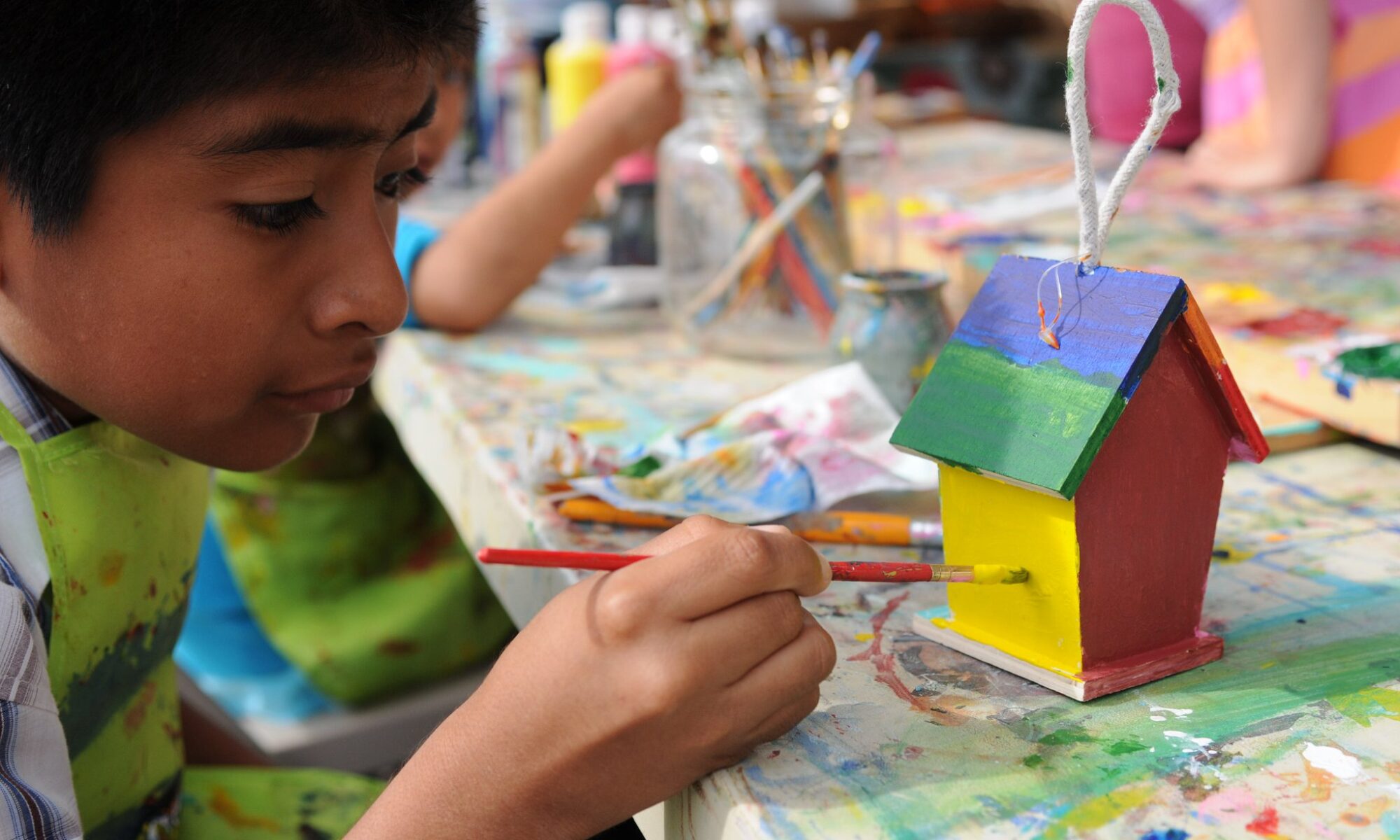

When adults want to help a child learn to draw, our natural instinct is often to reach for a step-by-step drawing tutorial. We sit our students down with a guide that shows them exactly how to draw a cartoon cat using a series of specific circles and lines.
While these copy-cat tutorials can be entertaining for a moment, they actually limit a child’s drawing skills. When children rely on an adult’s rigid template, they stop observing fondational elements. If their drawing doesn’t look exactly like the tutorial, they quickly become frustrated, lose confidence, and declare, “I’m not good at art!” I have heard this a thousand times.
Learning how to encourage drawing in children doesn’t require paint-by-number templates. Drawing is not a mechanical trick; it is a natural progression of physical movement and visual perception. And you do not need to know yourself how to draw!
As an art teacher trainer and author of 10 books on child art development, I have spent over three decades helping educators and parents move away from rigid instruction and toward process-based art lessons. Here is how you can support your child’s drawing journey naturally, without the pressure of step-by-step guides.
Understand the Natural Stages of Drawing Development
Before you try to teach a child what to draw, it helps to understand how drawing naturally develops. In my book, The Way Children Make Art, I emphasize that a child’s true relationship with drawing always begins with pure physical movement.
Drawing is a physical milestone before it is a visual one. The arm moves across the page, a line appears, and the child’s brain makes a powerful connection between their physical action and the resulting mark.
[ Pure Physical Movement ] ── > [ Exploring Basic Shapes ] ──> [ True Observational Form ]
Slowly, this physical impulse expands into shape recognition. Children don’t need an adult to tell them how to draw a circle; their brains naturally seek to organize their physical movements into enclosed forms. Over months and years, those simple shapes quietly transform into edges, boundaries, and contours.
Drawing is a long, beautiful developmental arc. When adults understand that drawing progresses naturally from movement to shapes to real-world forms, we can release the pressure to see a “perfect, finished picture” too soon.

The Way Children Make Art: SAM | The Science Art Method
by Spramani Elaun (Author)
ISBN-13 : 979-8991256117
Introduce Rich Mediums that Create High Contrast
One of the easiest ways to ignite a child’s excitement for drawing is to upgrade their materials. If a child is struggling to make faint, scratchy marks with a dull, generic pencil, they will quickly lose interest.
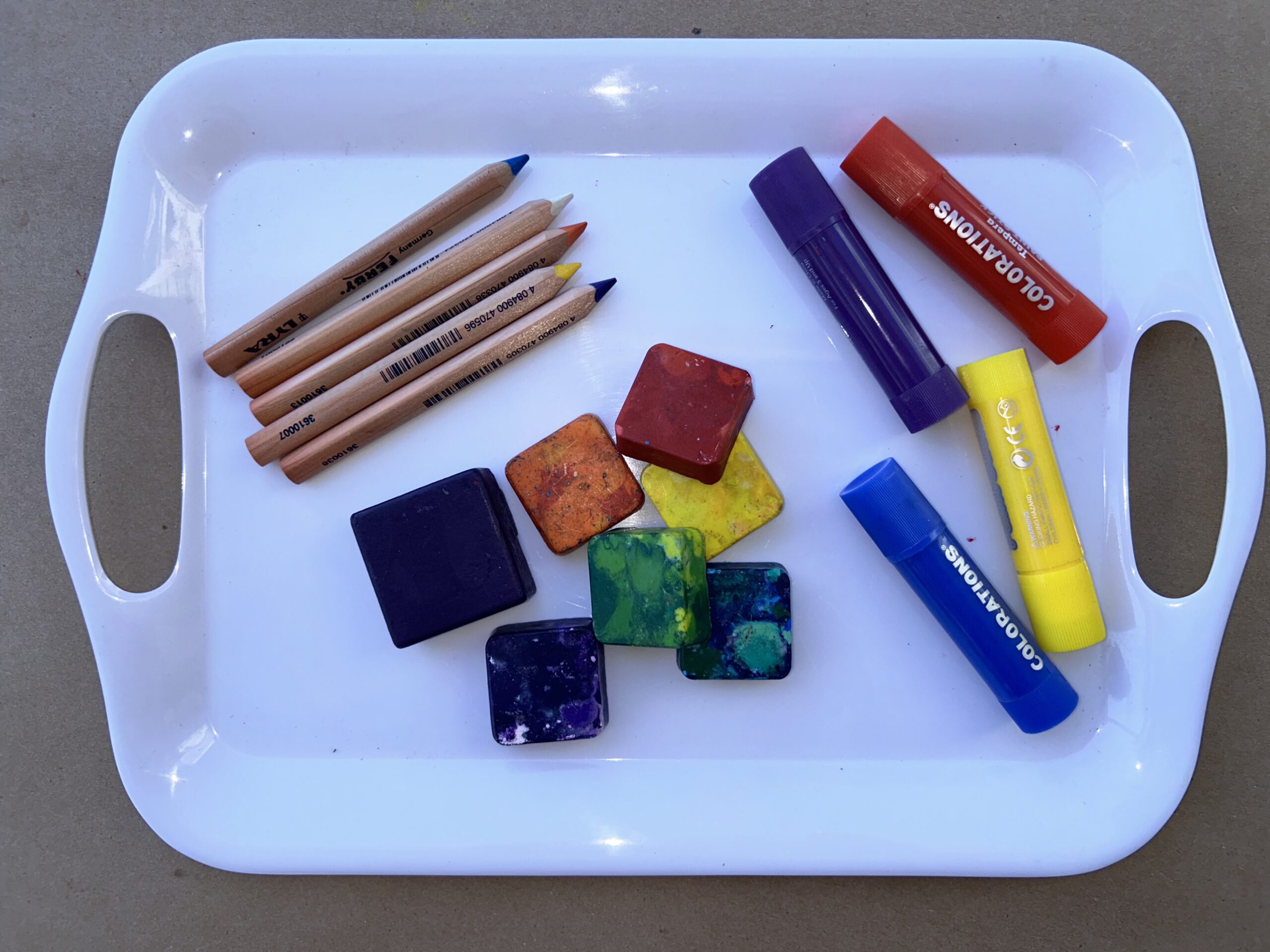
Instead, introduce high-pigment, rich mediums like smooth black oil pastels, beeswax blocks, markers or thick black crayons.
When a child uses a bold, confident black line and then introduces vibrant color right beside that mark, the visual contrast creates an exciting “color pop.” The dark line acts as a visual anchor on the page, allowing the child to confidently explore pressure, coverage, and spatial boundaries.
By watching how a child handles these materials, you can easily discern their developmental stage. Some children will stay completely immersed in the pure physical joy of making bold marks, while others will begin using those lines to build recognizable objects. Both stages are perfect milestones.

Shift Your Language to “Artful Acknowledgments”
Parents and educators can best support a child’s drawing journey by slowing down their own expectations and practicing what I call positive artful acknowledgments.
Instead of jumping in to correct their perspective or asking the dreaded question, “What is that supposed to be?”, simply reflect back the physical choices you see the child making.
Try using observational phrases like:
- “I see you pressing down hard here to create a really bold, dark line.”
- “Look at how that line goes all the way across the page to make an open space.”
- “You chose to put lots of little short lines right next to that big circle.”
These small, meaningful observations build a child’s self-awareness and creative confidence. It teaches them that you value their process and their thoughts, completely removing the performance anxiety to “draw well” for an adult’s approval. I discuss this in both of my early childhood and elementary art guides.

Bring a Proven, Stress-Free Drawing System into Your Space
You do not need to be a professional artist to raise a confident, visually literate child. You only need a little patience, a prepared workspace, and a deep respect for the natural timeline of child development.
When art time feels hectic or your children seem stuck, simply return to the absolute fundamentals: return to simple lines, return to high-contrast black mediums, and return to the steady, relaxing rhythm of making marks on paper.
If you want an open-and-go framework that completely eliminates step-by-step copying and replaces it with real, sequential skill-building, explore my proprietary curriculums and educator resources.
Discover Process-Based Drawing Programs:
- ✏️ The Sequential Drawing Curriculum for Children – My complete, open-and-go program designed to build pencil mechanics, hand strength, and authentic observation skills from early childhood through the elementary grades.
- 📜 The Art Teaching Blueprint™ Certification – A comprehensive professional development track for teachers, studio owners, and parents looking to lead children’s art programs with total developmental clarity.
- 📚 Browse All of Spramani Elaun’s Art Education Books – Expand your library with my physical handbooks covering clay modeling, painting, color theory, and child art philosophy.
About the Author
Spramani Elaun is an international art teacher trainer, professional artist, and author of 10 books on early childhood and elementary art education. As the founder of Nature of Art® and the creator of the Science Art Method™, she has spent over two decades developing structured visual arts systems that bring calm, order, and true creative independence into classrooms and homes worldwide.


All rights reserved © 2026, Nature of Art®

Nature of Art® provides art pedagogy
This website and its blogs supports individual educators in teaching children visual arts. It does not authorize professional development, staff training, or adaptation of the Science Art Method™ for institutional use.
No part of this blog may be used or be reproduced in any manner whatsoever including reproducing, publishing, performing, and making any adaptions of the work – including translation into another foreign language without written permission except in the case of brief quotations embodied in critical articles and reviews.
Nature of Art® Publishing P.O. Box 443 Solana Beach, California 92075.
About The Author
