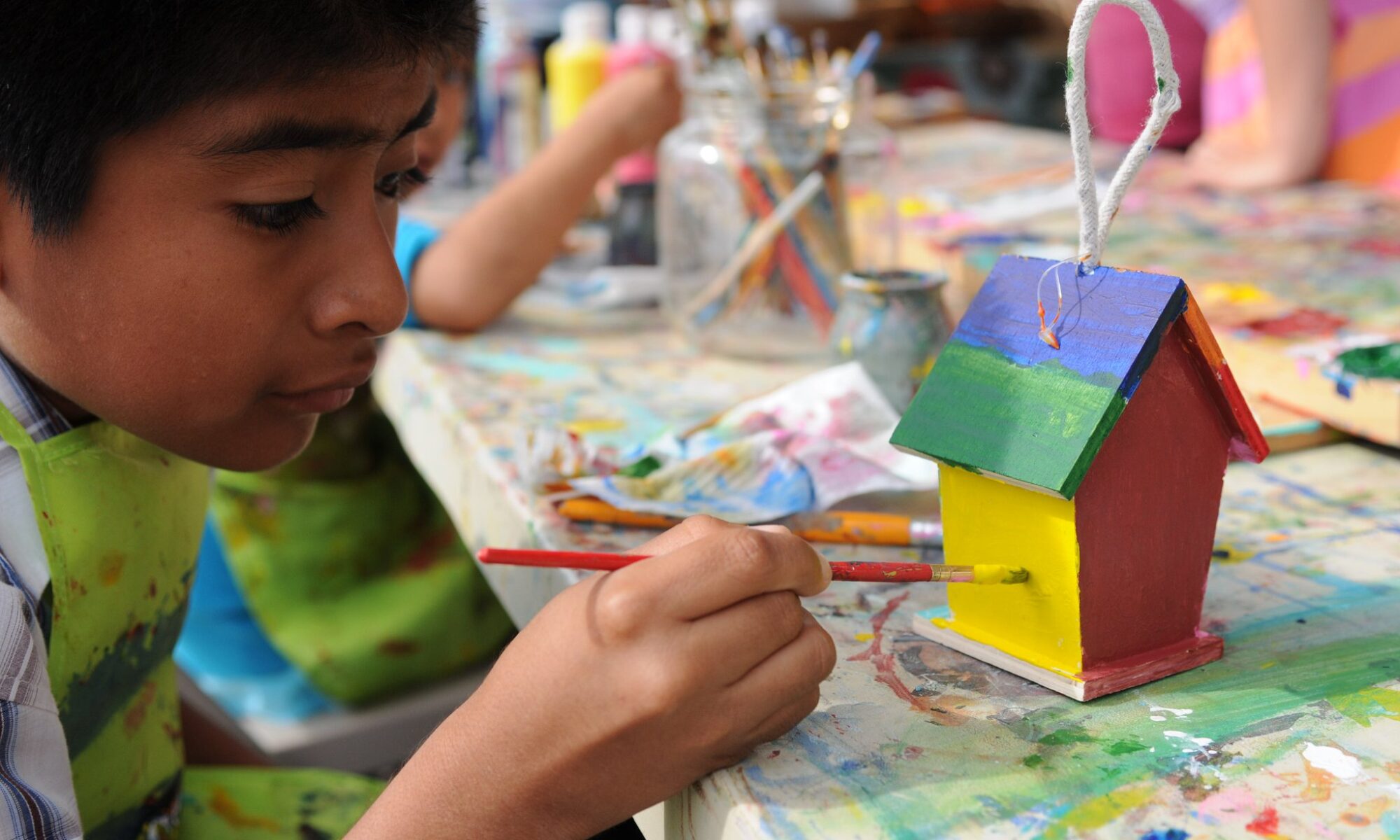
What should a kids art curriculum teach?
A kids art curriculum should teach these areas of visual art: drawing, painting, color theory, clay modeling, and crafting. Each area builds in sequence, so a child develops real skill instead of finishing a series of unrelated projects. It should also prepare the adult, with materials lists, guidance for the space, and what to look for as the child works.

Five Curriculums
Your child won’t need a template.
Most art programs give children art to copy. These curriculums build skills for the future: drawing, painting, color theory, clay modeling, and crafting. So they can imagine their own creative ideas.
Built on the Science Art Method™. Bundle 2 or more and save. Sale ends Friday, August 28.

What your child learns
Five skills, taught in sequence.

01
Drawing
Your child learns the foundational art elements and builds from first sketch to realism, so they can draw whatever they picture.
44 sequential lessons

02
Painting
Your child masters real brushstroke control through sumi-e and Chinese brush calligraphy. Once the strokes are in their hand, they paint on their own.
57 brushstroke lessons

03
Color Theory
Your child learns how color actually works: value, mixing, and combination. They stop guessing at color and start choosing it.
37 color mixing lessons

04
Clay Modeling
Your child learns ceramic foundations, from slab building to joining and shaping, so their 3D forms hold together.
29 lessons

05
Crafting
Your child works through 10 traditional craft methods, including sewing, weaving, mosaics, and wool. By the end, they design and build a piece from scratch.
10 foundational principles, 3 levels each, 30 practice and process activities
Every skill above is on sale for back to school.
Shop the salePrepared for you
What’s included in every curriculum.
- A clearly organized scope and sequence of studio experiences
- Prepared lessons you can schedule weekly, biweekly, or as time allows
- Guidance for preparing the art environment and materials
- Complete materials lists
- Photo examples for reference
- Art educator support by email
Educational alignment
Built on real art standards.
Lessons are structured around the Elements and Principles of Design and follow the artistic process through open-ended studio work. The curriculum meets and exceeds national and international core arts standards, and is designed to support long-term creative confidence and independence, not a set of one-off projects.
The Science Art Method™
Founded on 30 years of research.
The Science Art Method™ is the framework underneath every curriculum on this page. It comes from 30 years of teaching children in real studios, observing closely, and recording what actually happens as a child learns to make art.
At its center is a proprietary sensory method. Children build visual art literacy through direct sensory experience with real materials, introduced in the order their eyes and hands are ready to receive it. That order is the difference between a child copying a picture and a child learning to see.
The Science Art Method™ is the original work of Spramani Elaun and belongs to Nature of Art®.
Back to School Sale
Choose your format, then your bundle.
The more curriculums you take, the less each one costs. Sale ends Friday, August 28.
All five are in the sale: Drawing, Painting, Color Theory, Clay Modeling, and Crafting.
Digital Download & Printable
Delivered to your inbox within 24 hours. Print your copy and start teaching right away.
Important. Please read before you buy.
Each purchase is a single-user license to print one copy, for one teacher. Copies may not be duplicated, distributed, or resold. Teaching at a school or co-op? Email us about multi-teacher licensing.
Digital products: all digital sales are final and non-refundable. No refunds once access is granted. Full terms are in our Terms of Service.
At checkout Type which curriculums you want in the form on the Stripe page.
Printed, Spiral Bound & Shipped
Your curriculum arrives professionally printed and spiral bound, so it lies flat on the table while you teach. Orders leave the studio within 3 to 4 business days and ship USPS anywhere in the US. Outside the US, reach out to arrange shipping cost.
Important. Please read before you buy.
Each purchase is a single-user license for one teacher. Copies may not be duplicated, distributed, or resold. Teaching at a school or co-op? Email us about multi-teacher licensing.
Full terms are in our Terms of Service.
At checkout Type which curriculums you want in the form on the Stripe page.
Both formats include the Science Art Method™ and the full sequential curriculum.
The FAQ
Do I need art training to teach this?
No. Every curriculum is written for an adult with no art background. The lessons tell you what to prepare, what to demonstrate, and what to say. Art teachers, Teachers, parents, and homeschooling families use the same materials.
What ages is it for?
Early childhood through elementary, roughly ages three to twelve. Drawing has an early childhood edition and an elementary edition. The others adapt by how much you expect from the child, not by changing the lesson.
How many lessons are in each curriculum?
Drawing has 44 sequential lessons. Painting has 57 brushstroke lessons. Color Theory has 37 color mixing lessons. Clay Modeling has 29. Crafting works differently, with 10 foundational principles at three levels each, about 30 practice and process activities.
Should I start with one, or buy all five?
Start with one and go deep before you go wide. Most people begin with Drawing, because it is the foundation the others build on. Painting is the usual second choice.
What is the difference between this and free art projects online?
A project produces one finished object. A curriculum builds a skill in order, so each lesson depends on the one before it. That order is what lets a child eventually work independently.
Digital or printed, which should I choose?
Digital arrives within 24 hours and you print it yourself. Printed arrives spiral bound so it lies flat while you teach, and ships within 3 to 4 business days. Both contain the same curriculum.