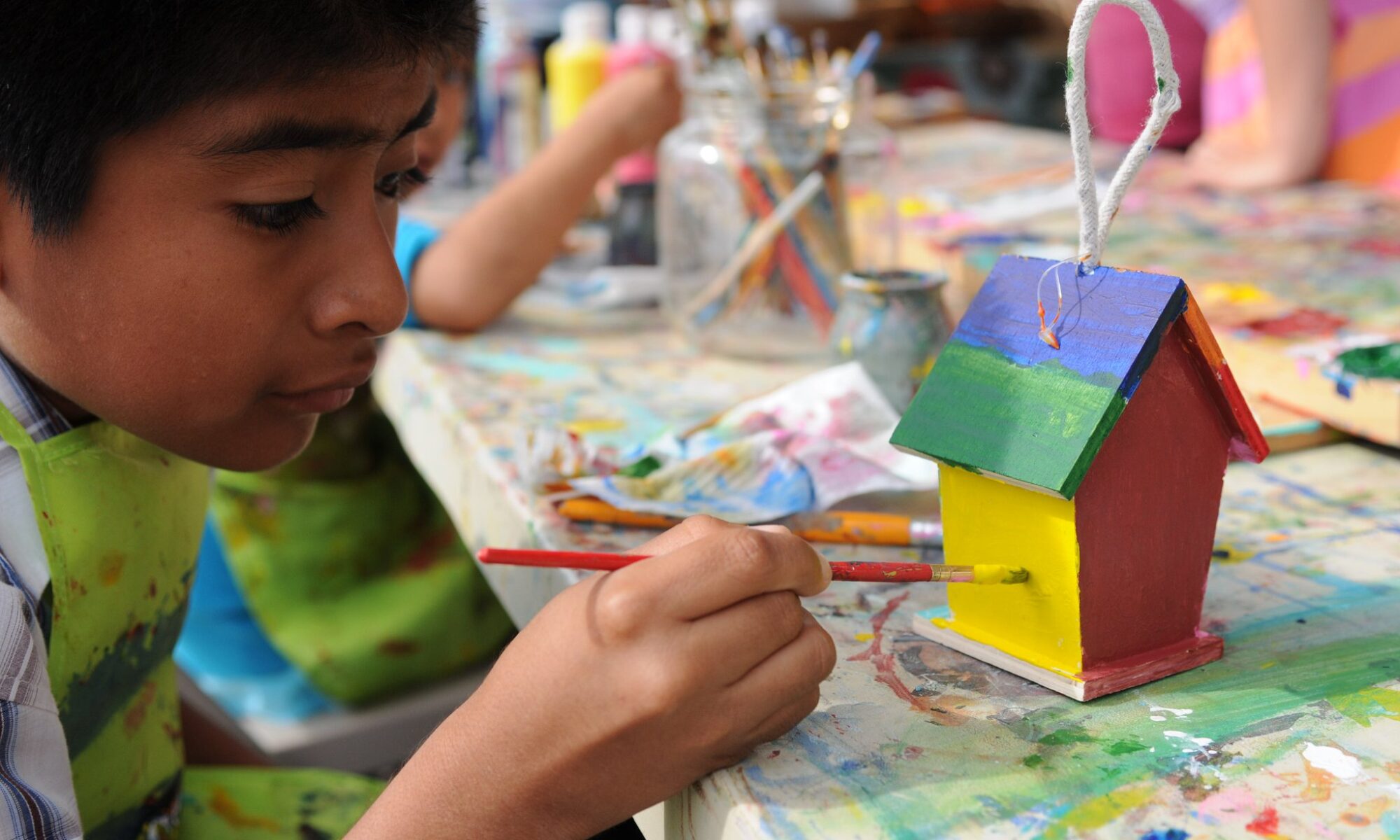

The best homeschool art curriculum for elementary students is one that is structured, sequential, and focused on building real visual art skills over time. It should guide parents step-by-step, require minimal setup, and help children develop both technique and creativity.
If you are homeschooling, you already know how full your day can feel with math, reading, science, history… and then there is art. Not to metion your daily home routine!
Art is often the subject parents want to include, but feel unsure how to teach, especially if you do not consider yourself artistic. You may find endless craft ideas online. They look fun. But here is the truth: Most one-off art projects do not build real skills or visual literacy. Over time, that gap matters for elementary kids.
A strong elementary homeschool art curriculum should help your child learn how to draw, paint, and create with confidence—not just complete projects. If you want to better understand how children naturally develop art skills, you can start with my book The Way Children Make Art

What Makes the Best Homeschool Art Curriculum?
The best homeschool art curriculum is not random. It is structured, sequential, and skill-based. Instead of disconnected projects, it teaches art step by step—so each lesson builds on the last.
A strong curriculum should be:
Structured and sequential
Focused on skill-building (not just activities)
Easy for parents to follow
Designed for a home environment
Focused on real visual art literacy
Flexible for long-term growth
When these elements are in place, children begin to understand how art works—not just how to finish something.

Why Homeschool Parents Need a Structured Art Curriculum
If you are not an artist, you are exactly who a good curriculum is designed for. You should not feel like you are guessing your way through art. A well-designed program gives you:
- Clear guidance on what to teach
- The correct order of lessons
- Confidence in your role as the teacher
Instead of asking “What should we do today?”, you follow a progression that makes sense.
A Home-Friendly Way to Teach Art
You do not need a studio or complicated setup.
Some of the best art learning happens right at the kitchen table. I know… I homeschooled my children at our kitchen table for 20 years!
Look for a curriculum that allows you to:
- Set up quickly with minimal materials
- Use simple, quality supplies
- Clean up easily
- Teach in everyday spaces
If you want a deeper look at how this is structured across elementary, see my elementary art guide.

What Is Developmental Sequencing in Art Education For Students?
Developmental sequencing is what allows children to build real skills over time.
Children need:
- Practice with foundational skills
- Time to explore materials
- Opportunities to apply what they learn
Without this sequence, children may create projects, but they do not truly understand what they are doing. A strong curriculum builds learning in layers.

The Technique vs Creativity Balance in Art Learning
One of the biggest misunderstandings in art education is how technique and creativity work together. Children need both—but in the right order.
- Technique without creativity → leads to copying
- Creativity without technique → leads to frustration
How This Looks in Real Learning
In the elementary years:
- Children practice specific skills (lines, shapes, brush control, color mixing)
- Then they use those skills in open-ended ways
Over time, they begin making independent creative choices.

What Art Skills Should Elementary Students Learn?
Elementary students should develop skills across key areas:
They also need:
- Exposure to visual ideas
- Practice using materials correctly
- Language to talk about their work
By upper elementary, the goal is intentionality, not perfection.
Children should be able to:
- Choose a material
- Decide how to use it
- Explain their artistic decisions
This is when true art literacy begins.

Why Most Homeschool Art Programs Don’t Work
Craft-Based Programs
- Focus on finished products
- Limited skill development
- No long-term progression
Fully Open-Ended Programs
- Encourage creativity
- But lack skill instruction
- Leave children feeling stuck
Here is a simple comparison:
| Feature | Strong Curriculum | Weak Curriculum |
|---|---|---|
| Structure | Sequential lessons | Random projects |
| Skill Building | Yes | Minimal |
| Creativity | Guided + independent | Copying or unclear |
| Parent Friendly | Step-by-step | Confusing |
Children need both structure and creative freedom, in the right sequence.
A Better Way to Teach Art at Home
A strong approach organizes learning so children move from:
Understanding materials → Practicing skills → Making creative choices
This progression builds confidence and independence.
The Science Art Method® by Nature of Art® follows this developmental path—guiding children from learning how materials work to making intentional decisions with them.
If you are ready to bring this structure into your homeschool, you can explore a structured homeschool art curriculum designed for parents click here.
Homeschool Art Curriculum FAQs
What is the best art curriculum for homeschool elementary students?
The best curriculum is structured, sequential, and builds real visual literacy over time. It should be easy for parents to follow and work in a home environment without requiring an art background.
What art skills should elementary students learn?
Students should develop skills in drawing, painting, color, and 3D art, while learning how to make independent creative decisions. By upper elementary, the goal is intentionality.
Do I need to be an art teacher to teach art at home?
No. A well-designed curriculum provides step-by-step guidance so parents without art training can confidently teach art.
Final Thoughts
The best homeschool art curriculum does two things well:
- It builds real skills over time
- It is easy for parents to use
When both are in place, art becomes a meaningful and consistent part of your homeschool.
Not something you struggle to include, but something your child grows from.
Nature of Art® Publishing offers a variety of art curricula for purchase, including drawing.
Learn More About These Curriculunms Here:
Art Curriculum – For Teaching Children Visual Arts
What Is a Good Art Curriculum for Teaching Children?
Homeschool Art Curriculum, Done-For-You Art Learning at Home
Order Homeschool Art Curriculums Here

About the Author: Spramani Elaun is a professional artist, author of 10 books on early childhood and elementary art education, and founder of Nature of Art®. She holds degrees in Fine Arts, Graphic Design, Digital Media, Print Media, and Business, and has spent over two decades developing the Science Art Method™. She trains Montessori schools and independent educators worldwide.
About The Author
