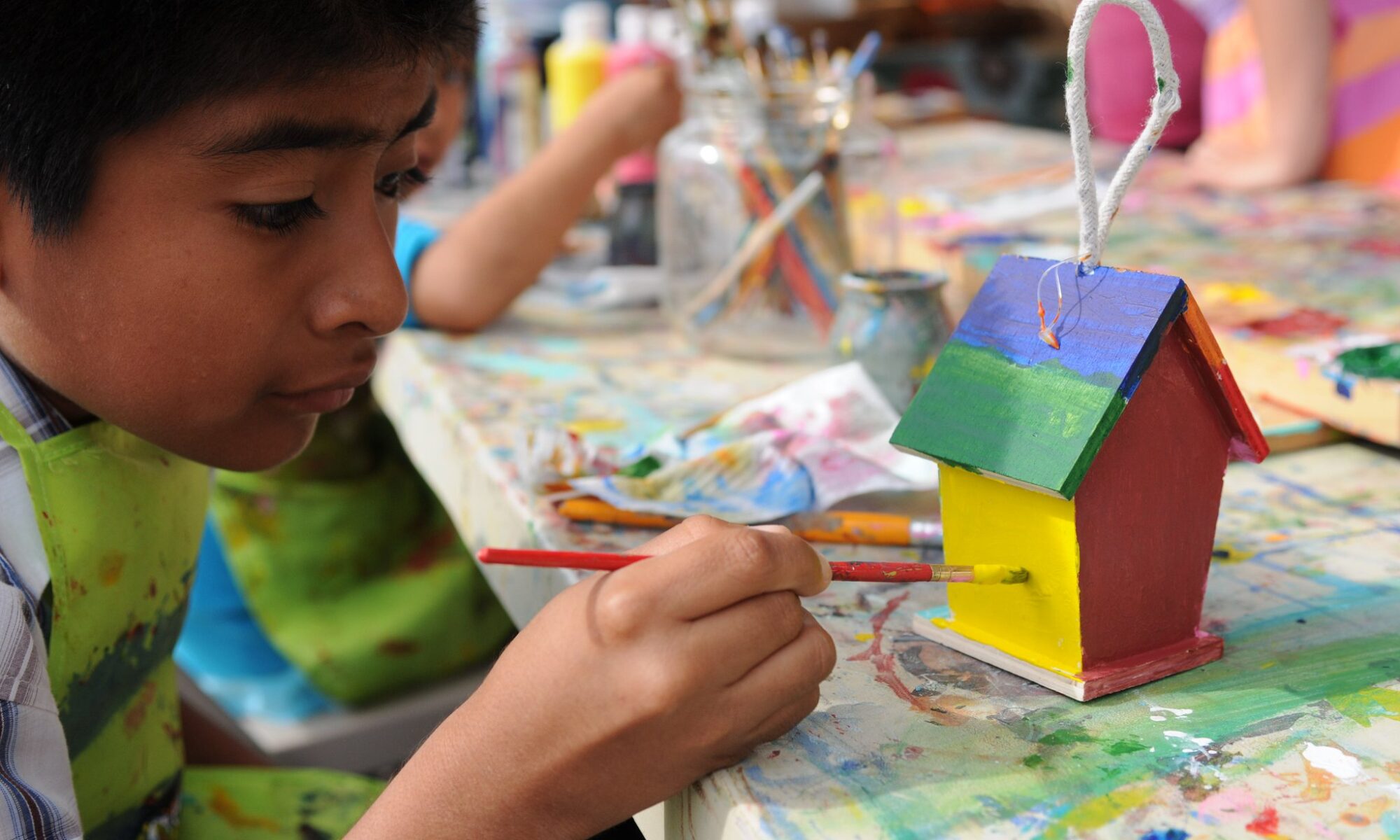

Over the years, I’ve worked with elementary teachers and students exploring different ways to bring visual arts into their classrooms. Some of my favorite experiences have involved combining children’s poetry with drawing and painting.
My goal was simple. I wanted children to create artwork that reflected the moods, feelings, and ideas in their poetry. What excited me most was watching children light up when they realized they could bring their words to life through art! In most of the workshops I taught, children wrote their poetry first and then created artwork to go along with it.
But one particular experience with a Montessori elementary guide took a different approach.
She asked me if her students should write their poetry first and then have me come in to teach the art portion. After talking it over, we decided to do the opposite! I would come in first and teach fine art skills, focusing on watercolor painting and color theory. Then, during their regular classroom time, the children would write poetry inspired by their artwork.

The teacher and I had worked together before, so we had a pretty good idea of what would happen. The children would be excited about their paintings, and that excitement would lead to lots of creative writing! In fact, this Montessori guide knew her students would want to write all kinds of poetry to go along with their artwork.
I loved seeing how one creative experience could lead to another.
I actually dedicated an entire chapter in my elementary art guide to sharing how we designed this type of program and connected visual arts with creative writing.
Poetry Is an Art Form Too!
But back to poetry!
Poetry comes from within. It’s fueled by emotions, ideas, dreams, imagination, and so much more. That’s one of the reasons poetry is considered an art form. Maybe you haven’t explored poetry much with your students, or perhaps you’ve been wanting to introduce it but aren’t sure where to start.
When my son and daughter were very young, we spent some time exploring poetry together. We read poems by different poets and discovered some of the more well-known poetry books for children. It was such a whimsical time!
I think what made it so enjoyable was that we weren’t trying to make poetry into something difficult. Some poems were funny, others were mysterious, and some just made us feel or imagine something unexpected.
We weren’t worried about understanding every word or getting the meaning right. We were simply enjoying poetry!
Rediscovering Poetry Through Emily Dickinson
Recently, I watched the Apple TV+ series Dickinson, which tells a modernized story inspired by the life of poet Emily Dickinson (not P.G.). I found it interesting how her life and poetry were presented through a modern lens. But what really caught my attention was realizing I had books of Dickinson’s poetry sitting right on my own bookshelf that I hadn’t explored very much!
After learning more about her interesting life, I bought another book of her poetry. The more I read, the more I began to appreciate some of the unusual words and expressions she used during her time. Before I knew it, I was pulling out other poetry books from my home library.
I started exploring different types of poems and became curious about the many ways poets express their thoughts and feelings. It reminded me how much fun it can be to discover something new, even when it’s been sitting on your bookshelf for years!
Bringing Poetry and Visual Arts Together
As an art teacher, one thing I often share with my students is that poetry and visual arts have something very special in common.
They both come from the creator.
There is only one you, the storyteller, the artist, the person imagining the words or creating the images. I love that both poetry and art give children a way to share what’s going on inside their imaginations. Sometimes children can express things through pictures or words that they might not know how to explain otherwise.
A poet uses words to tell a story or express a feeling. An artist can use lines, shapes, colors, and textures to do something very similar. And what I find so interesting is that one can inspire the other! You can read a poem and feel inspired to paint something. Or you can create a beautiful painting and suddenly have an idea for a poem.
That’s exactly what I experienced working with that Montessori elementary classroom.
If you’ve been wanting your students to become more creative and connect with their feelings through art, I think poetry, painting, and imagination might be just the right potion!
A Cozy Fall and Winter Art Activity
As the weather gets cooler and children spend more time indoors, poetry and art can be a wonderful way to slow things down and enjoy some quiet, creative time together. And you don’t need much to get started! Just gather a poetry book, drawing paper, colored pencils, or watercolor paints.
Read a poem together, talk about what it makes you imagine, and then invite children to create artwork inspired by the words.
You can even make it a cozy afternoon activity with warm drinks, a favorite poem, and art supplies spread across the table. I think this is such a lovely way to combine reading, imagination, and creative expression on those chilly indoor days.
15 Creative Ways to Explore Poetry With Children
If you’re looking for something creative to do with your children during these cooler months, here are a few ideas you might enjoy. Some involve drawing and painting, while others are simple ways to bring more poetry into your day.
You don’t need to do them all. Just choose a few that sound fun!
- Draw pictures inspired by poetry. Read a poem aloud and invite children to draw what they imagine.
- Paint the feelings or moods of a poem. Explore how different colors and brushstrokes might express the emotions in a poem.
- Read poetry aloud together. Enjoy a poem or two without worrying about understanding every word.
- Add poetry to your morning routine. Start the day with a short poem or favorite verse.
- Discover interesting words. Talk about unusual, funny, or beautiful words you find in poems.
- Learn about famous poets. Explore the lives and stories of poets from different times and places.
- Find poets on a map. Discover where your favorite poets lived and wrote.
- Connect poetry with history. Learn what was happening in the world when a poet was writing.
- Practice handwriting with poetry. Let children copy a favorite poem or a few lines they enjoy.
- Read poetry with expression. Encourage children to practice reciting poems aloud.
- Memorize a favorite poem. Start with something short, fun, or meaningful.
- Explore nature poetry. Find poems about flowers, birds, animals, seasons, and the natural world.
- Connect poetry with other subjects. Bring poems into nature studies, science, geography, or history lessons.
- Have a poetry tea time. Enjoy a relaxing afternoon with poetry, warm drinks, and snacks.
- Keep poetry books nearby. Make a little collection of poetry books children can explore whenever they’re curious.
Let One Art Form Inspire Another
One of the things I love most about combining poetry and visual arts is that there isn’t just one way to do it. You can begin with a poem and let children create artwork inspired by the words. Or you can begin with drawing or painting and see what kind of poetry comes from the experience.
I’ve seen both approaches work beautifully with children.
And, of course, there is an entire world of poetry to explore! Different types of poems, famous poets, and so many interesting ways to play with words.
But you don’t have to start with all of that. Sometimes, simply reading a poem and inviting children to draw or paint what they imagine is enough.
So, if you’re looking for a quiet indoor activity this fall or winter, pull out a poetry book and some art supplies.
You might be surprised by what your children create! Love to hear your feedback.
Warmly,
Spramani Elaun
Frequently Asked Questions About Combining Poetry and Art
Should children write a poem first or create the artwork first?
Both approaches work wonderfully, and switching the order can spark different types of creativity. While many teachers have students illustrate a poem after writing it, my experience working alongside Montessori elementary guides taught me that starting with visual art, such as watercolor painting and color theory, often lowers the pressure of a blank page. When children are excited about the colors and moods they painted, creative writing flows much more naturally.
How do I introduce poetry to elementary students if they find it boring or confusing?
Focus on imagination and enjoyment rather than strict literary analysis. From teaching elementary workshops to reading poetry with my own children when they were young, I’ve found that children connect best when they aren’t pressured to “get the meaning right.” Start with funny, mysterious, or nature-themed poems, read them aloud with expression, and ask children what colors or pictures the words make them see in their minds.
What art supplies do I need for a poetry and painting lesson?
You don’t need complicated materials to connect visual arts with creative writing. A favorite children’s poetry book, basic drawing paper, colored pencils, or a simple set of watercolor paints are more than enough. Watercolors are especially effective because children can experiment with blending colors and brushstrokes to match the emotional mood of a poem.
How can I connect poetry and art to other subjects like science or history?
Poetry naturally bridges cross-curricular learning. You can read nature poems during outdoor science studies, locate famous poets on a map during geography, or explore what was happening in the world during a poet’s lifetime—such as looking at Emily Dickinson’s life and unusual vocabulary, to bring history lessons to life.
What is a simple indoor poetry activity for fall or winter days?
Host a “poetry tea time.” Gather a small stack of poetry books, warm drinks, snacks, and simple art supplies on the table. Read one or two short poems together without over-analyzing them, and invite children to draw or paint whatever the verses inspire.
About The Author

the poetry tea time idea is sooo lovely, warm drinks and snacks and a little stack of poetry books, I can already picture my kids actually sitting still for that haha. I also liked the Montessori story about whether kids should write the poetry first or make the art first, I had never thought about how switching the order changes what they create. gonna try painting the feelings of a poem this weekend