What is Mixed Media Art? A Simple Guide for Parents and Teachers
What exactly is mixed media art? If you ask five different artists, you might get five different answers.
Whether you are a parent looking for afternoon craft ideas or a teacher planning your next classroom art lesson, understanding what “mixed media” actually means, and what it isn’t, can unlock a whole new world of creativity for your kids.
What Does Mixed Media Mean?
In the simplest terms, mixed media art means combining two or more distinct mediums or materials into a single piece of artwork.
The key word here is combining. If you are only using one type of paint, even on an unusual surface, it isn’t mixed media.
The Golden Rule: To be considered mixed media, the different materials must work together to create the final image.
The Common Misconception: Texture vs. Medium
This topic actually came up in an adult art class I was taking recently. I was painting a watercolor elephant over a layer of textured tissue paper glued to my page.
Is that mixed media? Technically, no.
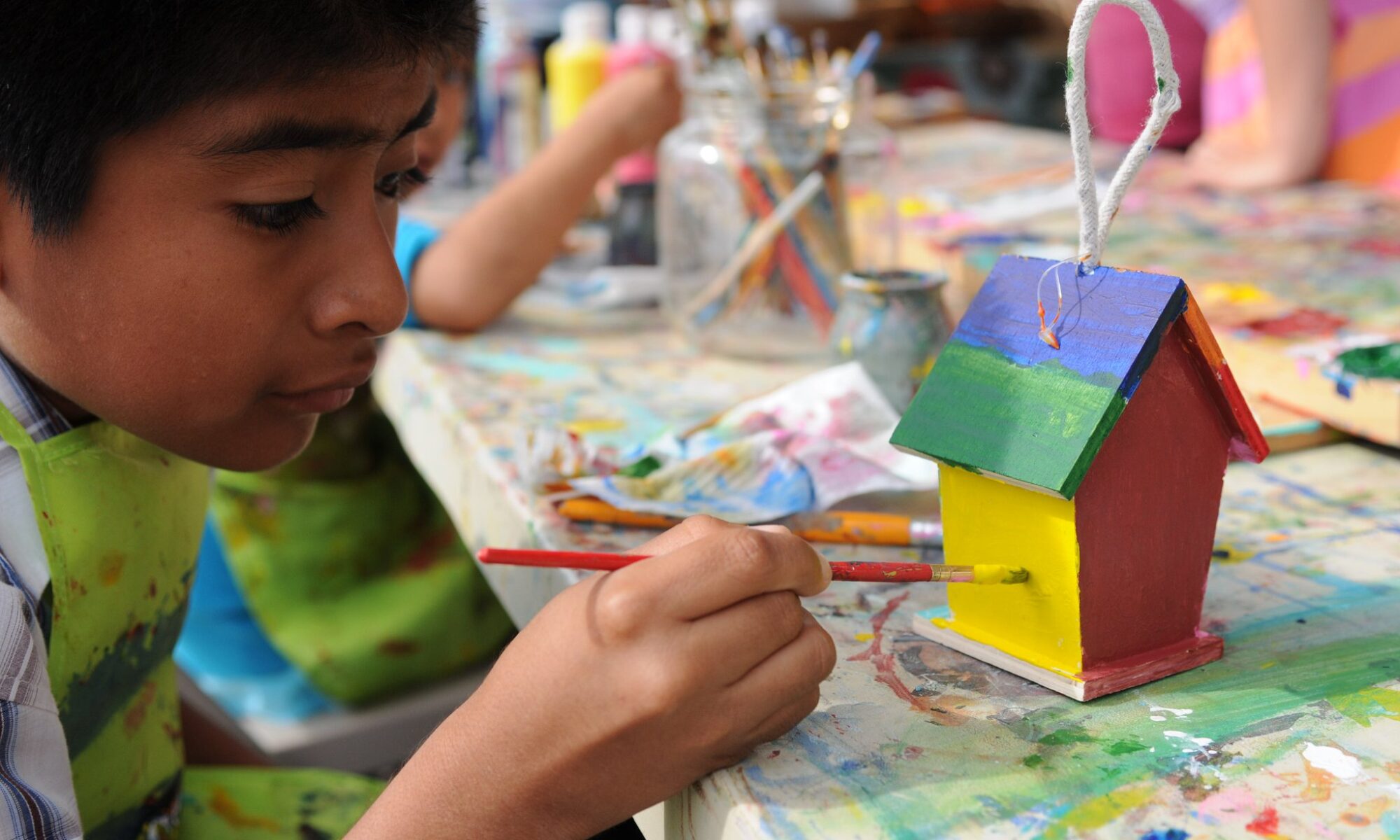
Because I was still building the entire image using only one medium (watercolor), it’s just a textured watercolor painting. The same goes for painting a rock with acrylics or a wooden birdhouse with tempera paint. You are using a single medium on a unique surface.
When does it become true mixed media?
Not Mixed Media: Painting an elephant with watercolor over glued down tissue paper.
Mixed Media: Cutting out shapes of an elephant from colored construction paper, gluing them down, and then painting the background with watercolor.
By using both paper shapes and paint to build the final image, you have successfully combined two mediums!
3 Simple Mixed Media Examples for Kids
If you want to introduce this concept to children, you don’t need expensive art supplies. You can easily create a beautiful collage or mixed media piece using recycled materials and basic crafts:
The Button Fish: Paint a fish on a piece of scrap wood or cardboard using acrylic or tempera paint, then glue down shiny buttons for the eyes and scales.
The Fabric Bird: Paint a landscape with a bird silhouette, then cut and glue scrap fabric pieces to create textured wings and bodies.
The Nature Collage: Draw a tree trunk with markers or colored pencils, then go outside and glue real leaves and twigs to the paper to create the branches.
Art is all about experimentation. Don’t be afraid to let your students or kids break the rules, mix their materials, and see what happens!
This website and its blogs supports individual educators in teaching children visual arts. It does not authorize professional development, staff training, or adaptation of the Science Art Method™ for institutional use.
No part of this blog may be used or be reproduced in any manner whatsoever including reproducing, publishing, performing, and making any adaptions of the work – including translation into another foreign language without written permission except in the case of brief quotations embodied in critical articles and reviews.
Nature of Art® Publishing P.O. Box 443 Solana Beach, California 92075.
Spramani Elaun is an American art pedagogue, author of 10 books on visual arts education, and the creator of the Science-Art Method™. A 20-year homeschool veteran and international educator, she specializes in child cognitive development, fine-motor scaffolding, and visual-spatial perception across Montessori, homeschool, and elementary learning environments. Spramani is the founder of Nature of Art®, offering comprehensive print and digital curriculums (29–50 lessons per volume) that integrate visual arts with botany, natural sciences, world cultures, and literature. Explore her curriculum library at EcoKidsArt.com