

Quick Answer
Painting with kids works best when you start small. Use low-cost surfaces, non-toxic child-grade paint, and a minimal tool kit. Keep the space calm, the materials limited, and the early skills simple. Confidence and curiosity matter more than realism.
Hello, I’m Spramani Elaun, founder of Nature of Art® and author of Kids Painting. For more than two decades I have taught painting to children from toddlers through teens, in classrooms, studios, workshops, and Montessori schools worldwide. This guide is written for parents, teachers, and Montessori guides who are new to painting with kids and want a steady place to begin.
You do not need to be a skilled painter to support a positive painting experience. Children learn best when painting feels simple, safe, and enjoyable.
The 6 Foundations at a Glance
| # | Foundation | Why It Matters |
|---|---|---|
| 1 | Easy surfaces | Removes pressure and cost |
| 2 | Safe, simple paint | Matches the surface and the age |
| 3 | Minimal tool kit | Keeps focus on painting |
| 4 | Small-scale starts | Reduces mess and stress |
| 5 | Calm painting space | Supports independence |
| 6 | Basic painting skills | Builds confidence first |
1. Begin With Easy Painting Surfaces
Painting with kids does not need to start on canvas. Canvas can feel expensive and creates unnecessary pressure for beginners. Simple, low-cost surfaces keep the experience relaxed.
Beginner-friendly surfaces include:
- Cardboard and cereal boxes
- Watercolor paper or thicker drawing paper
- Recycled paper or butcher paper
- Rocks and sticks
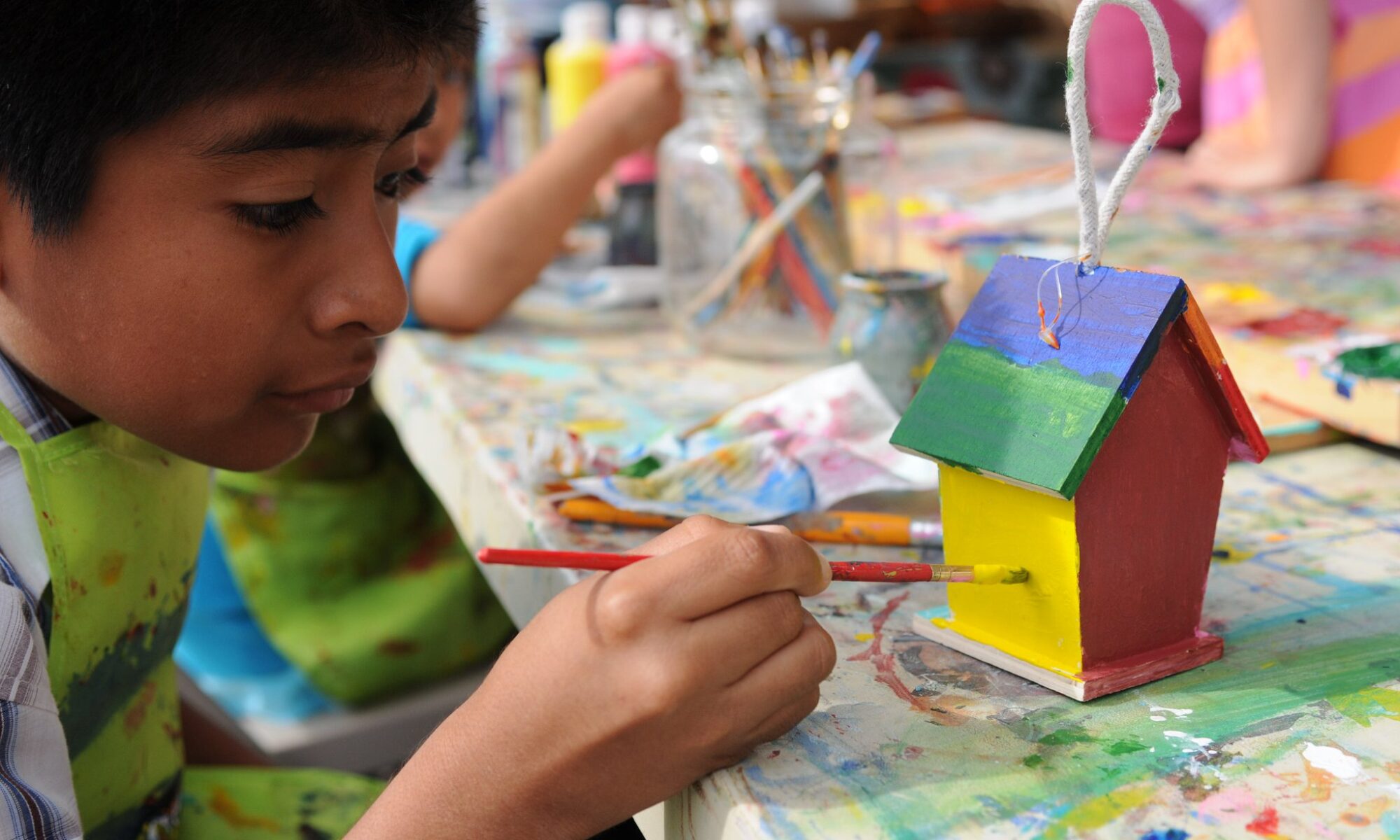
- Small pieces of wood
Once children feel confident, canvas becomes a natural next step.
2. Select Paint That Is Safe and Simple
Painting with kids starts with non-toxic, child-grade paint. The right paint depends on the surface you choose.
| Surface | Recommended Paint Type |
|---|---|
| Paper or watercolor paper | Washable tempera or watercolor |
| Cardboard, wood, rocks | Kid-safe acrylic |
| Sensory or early-learner use | Finger paint |
A small starter set is enough at first. Expand once you see what children gravitate toward.
3. Build a Simple Painting Tool Kit
Painting with kids works best when tools stay manageable. A minimal kit is enough to begin:
- One small and one medium paintbrush
- A palette, paper plate, or recycled egg carton
- A wash jar with water
- Napkins or rags
- Paper or a washable covering for the table
Fewer tools mean more focus on painting.
4. Reduce Mess by Starting Small
Painting with kids feels easier when the scale is small at first. A postcard-sized area or a small paper square works well for early sessions. Offer one small brush and a limited amount of paint. Spills stay manageable. Confidence grows naturally.
As children settle into the rhythm, paper size and paint amounts can grow with them.
5. Choose a Calm Painting Space
Painting with kids works best on a flat, sturdy table where children can reach everything without standing. Outdoor painting is lovely when the weather allows. Indoor painting works just as well.
Pick an area where small spills are not a problem. Easy cleanup supports a calm experience for everyone.
6. Introduce Basic Painting Skills First
Painting with kids begins with simple, repeatable actions that support independence. Early focus areas include:
- Loading the brush with paint
- Making basic brushstrokes
- Rinsing the brush
- Gentle color mixing
- Returning tools to the painting area
Preschool children often mix colors freely. That is developmentally normal. Children do not need to paint realistically. The goal is confidence, curiosity, and experience.

Painting With Kids FAQ
What age can children start painting? Children can begin as early as 18 months with supervised sensory experiences using finger paint. By age 3, most children can hold a brush and explore basic strokes.
Do I need to know how to paint to teach my child? No. Painting with kids is about setting up a calm experience and offering safe materials. Your role is to support exploration, not demonstrate technique.
What is the best paint to start with for toddlers? Washable, non-toxic finger paint or washable tempera. Both clean up easily and are safe for young hands.
How do I keep painting from being messy? Start with small paper sizes, a single brush, and a limited amount of paint. Cover the table with paper or a washable surface. Keep a wash jar and rags within reach.
Is canvas necessary for painting with kids? No. Cardboard, watercolor paper, recycled paper, rocks, and small wood pieces all work well for beginners and reduce pressure on both children and adults.
What is the difference between painting with kids at home and in a Montessori classroom? Both work from the same principles: calm space, prepared materials, and confidence in the child. A Montessori classroom usually adds a structured rotation of materials and a developmental sequence guided by the teacher.
Continue Painting With Kids With Support
Painting with kids becomes easier with experience and gentle guidance. For a parent- and teacher-friendly guide that covers setup, material choices, and confident teaching without overwhelm, my book Kids Painting walks you through it step by step.
About the Author
Spramani Elaun is the founder of Nature of Art® and the creator of the Science Art Method®. She is the author of 10 books on early childhood and elementary art education. She holds degrees in Fine Arts, Graphic Design, Digital Media, Print Media, and Business from Platt College San Diego. For more than two decades she has taught painting to children of all ages and trained Montessori schools, homeschool parents, and independent art educators around the world.

Kids Painting: Teach young kids how to paint, materials & set-up guide
by Spramani Elaun (Author)
ISBN-13 : 978-0991626410


All rights reserved © 2026, Nature of Art®

Nature of Art® provides art pedagogy
This website and its blogs supports individual educators in teaching children visual arts. It does not authorize professional development, staff training, or adaptation of the Science Art Method™ for institutional use.
No part of this blog may be used or be reproduced in any manner whatsoever including reproducing, publishing, performing, and making any adaptions of the work – including translation into another foreign language without written permission except in the case of brief quotations embodied in critical articles and reviews.
Nature of Art® Publishing P.O. Box 443 Solana Beach, California 92075.